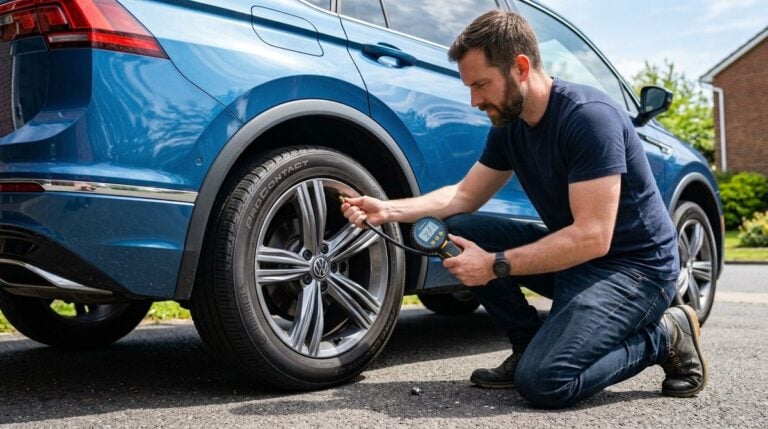
Gravel roads look forgiving from the driver’s seat, but they are hard on tires. Loose stones can cut sidewalls, sharp edges can puncture the tread, and a tire that is slightly underinflated can heat up and wear unevenly over a long drive. Rural drivers often cover many miles of unpaved road between towns, and a flat tire far from help can turn a simple errand into a full-day problem. A careful check before leaving home takes only a few minutes and can prevent most of the trouble. This article explains how to check pressure and tread properly, what to look for on the sidewalls, and how to prepare for the chance of a flat on a remote stretch.
Start with the correct pressure, not the number on the tire
The pressure printed on the tire sidewall is the maximum the tire can safely hold, not the amount your vehicle needs. The correct figure is usually on a sticker inside the driver’s door frame, in the glove box manual, or on the fuel door. Check pressure when the tires are cold, meaning after the vehicle has sat for several hours or has been driven only a short distance. Warm tires read higher, and adjusting them right after a long highway run can leave them underinflated once they cool. A reliable gauge is a small investment, and a digital model is easy to read in poor light.
Adjust pressure for loaded trips
A vehicle carrying tools, feed, fuel cans, or passengers often needs more pressure than the standard figure on the door sticker, and the owner’s manual or a tire professional can confirm the right number for a specific load. Heavy loads raise the stress on each tire, and an underinflated tire flexes more on gravel, which builds heat and makes a sidewall failure more likely. Make adjustments in small steps, recheck with the gauge, and never exceed the maximum printed on the tire. Keep a written note of the target pressure on a card in the glove box so that the figure is easy to find before a trip.
Readers may also want to visit fashiontrendslatest.com. Those pages are useful for drivers who are new to unpaved travel and want a clear, reliable reference before setting out.
Inspect the tread and sidewalls closely
Walk around the vehicle and look at each tire with a good light. Check the tread depth with a simple penny-style gauge or a tread depth tool, and replace any tire that shows bald patches or a worn center. Look for cuts, bulges, cracks, or stones lodged in the grooves, because a small stone can work deeper with every mile of rough road. A bulge on the sidewall signals internal damage that can fail without warning, and a tire with that problem should be replaced before any long trip. Note uneven wear, such as heavy wear on one edge, because it often points to a misaligned wheel or a suspension problem that a mechanic should inspect.
Prepare for a flat away from help
Even a well-checked tire can fail on a remote road, so plan for the possibility. Carry a jack that suits the vehicle, a lug wrench, a sturdy board to place under the jack on soft ground, and a spare that holds proper pressure. Some vehicles use a tire sealant kit instead of a spare, and that kit has limits, so learn what your vehicle carries before the trip. Practice changing the tire once in a driveway, because the first attempt on a gravel shoulder in the rain is a poor time to discover that the lug nuts are stuck or the jack handle is missing.
You can also visit Fashion Sky for more reading. Reading one of these guides before a long trip can prepare a driver for the unexpected without causing unnecessary worry.
A short pre-trip routine helps keep the checks consistent:
1. Check each tire’s pressure when cold and compare it with the door sticker
2. Adjust for the expected load, using the manual or a tire professional
3. Inspect the tread depth and look for cuts, bulges, and embedded stones
4. Confirm that the spare, jack, and lug wrench are present and usable
5. Note the tire size and pressure on a card kept in the glove box
For a related read on this site, see Weekly Appointment Planning for a One-Person Auto Detailing. Keeping one of these checklists in the vehicle makes the routine easier to repeat on busy mornings.
Gravel road driving rewards preparation. A few minutes with a gauge, a careful walk around the vehicle, and a tested spare can turn a long, dusty route into an uneventful one. Drivers who make the check a habit tend to find that the tires last longer and that the trip feels calmer from the first mile.